



 Jan 10.2026
AI virtual assistant innovation is a powerful catalyst for transforming business operations and customer engagement. The following sections will explore the underlying technologies, diverse industry applications, and strategic best practices essential for harnessing the full potential of these intelligent systems.
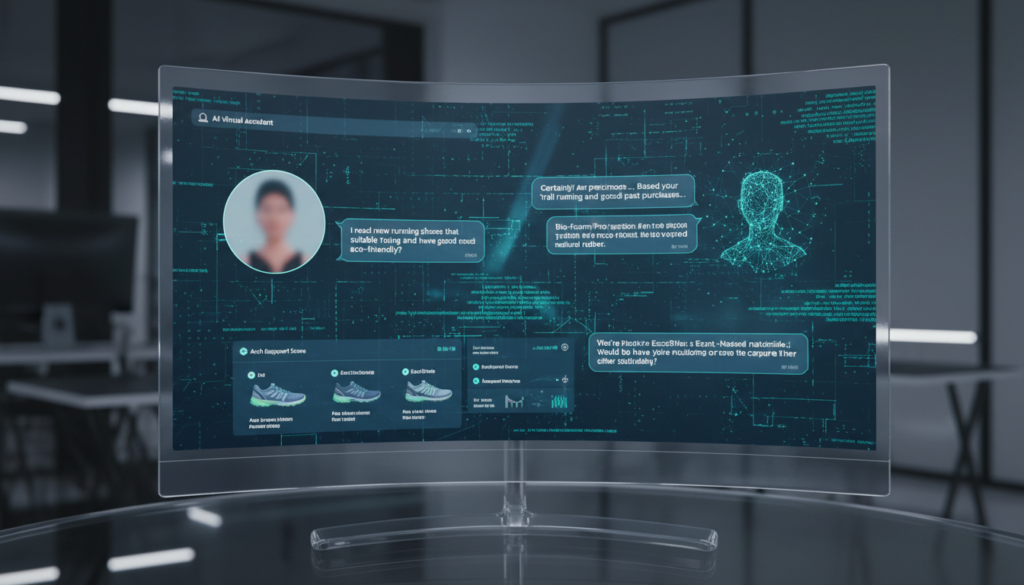
AI virtual assistant providing personalized, context-aware customer support via chat interface.
AI virtual assistants represent a transformative leap beyond traditional chatbots by leveraging the power of advanced machine learning and natural language processing (NLP). Unlike static, rule-based chatbots that function within rigid, scripted frameworks, AI virtual assistants understand the complexities of human language—grasping context, user intent, sentiment, and conversational subtleties. This semantic depth enables far more fluid, natural, and meaningful exchanges with users.
A fundamental differentiator lies in machine learning personalization: these assistants continuously analyze conversation history and user behavior, allowing them to adapt replies dynamically. Such personalization produces interactions that feel natural and relevant, exceeding the capabilities of simple FAQ-driven bots. Adding generative AI enhances this further, empowering AI virtual assistants to construct unique, context-aware responses or content in real-time rather than selecting from pre-set options. For instance, in e-commerce, an AI assistant can dynamically refine product recommendations during a live conversation by interpreting a customer’s preferences and browsing patterns—capabilities beyond traditional chatbots.
When selecting AI virtual assistant solutions, organizations should prioritize platforms that embed continuous learning loops and generative AI frameworks. This approach future-proofs automation strategies and ensures prolonged user satisfaction, adapting seamlessly as business needs and customer expectations evolve.

AI virtual assistants enhancing customer engagement and operational workflows in a modern office setup.
The remarkable capabilities of AI virtual assistants stem from the sophisticated integration of foundational technologies that enable human-like communication and adaptive intelligence. At its core, natural language processing (NLP) deciphers complex user inputs by performing intent recognition, entity extraction, sentiment analysis, and contextual understanding. This surpasses basic keyword matching, delivering contextually relevant, nuanced, and meaningful responses.
Machine learning personalization elevates the experience further; assistants refine their algorithms by continuously ingesting user feedback, conversation logs, and behavioral data. This ongoing training optimizes prediction accuracy and enables the assistant to tailor responses based on evolving customer profiles, thereby increasing operational efficiency and satisfaction.
Generative AI, exemplified by models like GPT, introduces a creative dimension by synthesizing responses dynamically instead of retrieving predetermined scripts. This capability empowers virtual assistants to draft personalized emails, generate summaries of lengthy documents, answer intricate queries, or produce content snippets aligned with specific business contexts on demand, thus expanding use cases to complex workflows across industries.
For smooth enterprise adoption, technical implementations must emphasize best practices such as robust API design, clear data type definitions (e.g., text fields as strings, toggles as booleans), and flexible typecasting options. These ensure seamless interoperability with diverse business systems—from CRM platforms and scheduling software to analytics tools—creating an integrated, efficient virtual assistant ecosystem.
Integrating AI-powered virtual assistants delivers measurable business value across cost reduction, efficiency, and enhanced customer experience. Automating routine inquiries and transactional workflows reduces reliance on human agents, enabling round-the-clock support without proportional increases in staffing. This scalability provides consistent, reliable responses while minimizing human errors, thereby improving accuracy and customer trust.
The personalization capabilities of AI assistants allow proactive customer engagement, leveraging interaction history and user data to craft bespoke journeys that accelerate resolution times and build brand loyalty. Intelligent routing and escalation protocols ensure complex issues are seamlessly handed over to human experts without loss of context, preserving service quality.
Businesses also gain from scalability; virtual assistants can handle millions of concurrent interactions, facilitating growth without additional resource strain. Moreover, extracting structured data from conversations generates actionable insights that inform continuous product, service, and workflow refinements.

AI virtual assistant streamlining patient scheduling and inquiries in healthcare settings.
Take healthcare as an illustrative example: after implementing AI virtual assistant automation for appointment scheduling and follow-ups, a provider reduced patient no-shows by 30% and increased patient satisfaction scores by 25%, translating into enhanced care delivery and operational efficiency. Similarly, financial institutions employing AI assistants for risk assessment and fraud detection see faster decision-making and improved regulatory compliance.
However, organizations must maintain updated training datasets to prevent model drift and ensure ongoing relevance, recognizing that continuous data freshness is vital to avoid degradation in performance over time.
AI virtual assistants are catalyzing transformation across a wide array of industries, providing scalable, tailored solutions that meet diverse operational needs. In healthcare, virtual assistants facilitate patient engagement through symptom triage, appointment management, medication reminders, and billing inquiries, alleviating clinical administrative burdens while improving patient care continuity and satisfaction.
In customer service environments, conversational AI manages high volumes of inquiries efficiently, resolving standard issues swiftly and escalating nuanced cases with full context transfer. This enhances service quality and reduces response times. Real estate companies are leveraging virtual assistants to automate property searches with natural language queries, schedule viewings via calendar integration, and deliver personalized market insights—key differentiators in competitive marketplaces.
E-commerce businesses harness AI virtual assistants to optimize shopping experiences by providing real-time product recommendations, automating order tracking, managing returns, and deploying dynamic, data-driven promotional campaigns that respond to customer behavior. In education, virtual assistants adapt curriculum delivery by personalizing learning paths, answering student queries, and automating administrative workflows, thus supporting scalable, learner-centric education models.
Legal firms use AI virtual assistants for contract review automation, compliance monitoring, and client inquiry triage, streamlining workflows and reducing turnaround times. Meanwhile, environmental organizations employ virtual assistants to analyze climate data, model impacts, and optimize resource allocation, demonstrating AI’s broad applicability.

AI virtual assistant enhancing real estate client interactions and automating property management tasks.
For example, a real estate firm implemented a stepwise AI virtual assistant solution by integrating Multiple Listing Service (MLS) databases, configuring intent recognition aligned with buyer preferences, automating calendar scheduling for property viewings via API connections, and deploying fallback escalation protocols to human agents. This comprehensive approach yielded measurable improvements in inquiry resolution speed and lead conversion rates, highlighting the practical benefits of intelligent automation.
Overall, AI virtual assistant innovation—powered by continuous machine learning and generative AI—fundamentally reshapes business operations and customer engagement by delivering intelligent, scalable automation that evolves in step with organizational needs.
AI virtual assistants are revolutionizing business operations and customer engagement by integrating advanced technologies such as natural language processing, machine learning personalization, and generative AI. These intelligent systems enable more natural, contextual, and adaptive interactions than traditional chatbots, unlocking significant efficiencies, cost savings, and enhanced customer experiences across industries including healthcare, real estate, e-commerce, finance, education, legal, and environmental management.
The broad applicability of AI virtual assistants underscores their potential as scalable platforms that generate actionable, data-driven insights to continuously improve service delivery and operational workflows. Success depends on integrating these assistants seamlessly with existing enterprise systems, maintaining rigorous data privacy and security standards, and establishing comprehensive measurement frameworks to track performance and ROI.
Looking forward, organizations that embrace continuous learning capabilities and strategic deployment of AI virtual assistants will secure a competitive edge in an increasingly digital business landscape. The future belongs to enterprises that not only adopt intelligent automation but proactively anticipate evolving customer needs, regulatory changes, and market dynamics by harnessing adaptable, data-centric AI systems. The pressing challenge is not whether to implement AI virtual assistants but how to strategically leverage their transformative power to innovate, grow, and lead in a rapidly changing world.

