



 Dec 05.2025
With these personal portfolio tips, you’ll be equipped to create a website that not only displays your skills beautifully but also actively attracts and converts clients. As we advance, we’ll explore actionable steps to design, write, and optimize each element of your portfolio to ensure lasting impact and client engagement.
A well-crafted portfolio website is the cornerstone of attracting clients online. To truly captivate your visitors, design with intention—focus on clarity, an intuitive visual hierarchy, and ample white space to create a seamless, enjoyable browsing experience. Clean layouts reduce distractions, allowing your showcased work to shine effortlessly. For instance, a creative designer who adopted a spacious, organized layout noticed a significant rise in client inquiries because visitors could more easily process and appreciate the projects visually.
When selecting or customizing portfolio templates, align them with your unique style—whether minimalist, artistic, corporate, or somewhere in between—while prioritizing responsiveness. A portfolio that looks polished on desktops, tablets, and smartphones is critical for capturing the growing mobile client base. Subtle interactive elements such as hover effects or lightboxes enhance engagement without compromising page speed, but overly complex animations can deter visitors with slow load times.
Avoid common pitfalls like overcrowding pages with too many projects or inconsistent styling, which dilute your brand message and confuse visitors. Mobile optimization is non-negotiable; sites that perform poorly on smartphones risk losing valuable leads. By emphasizing these design essentials, you create a visually balanced portfolio that guides client attention naturally, encouraging deeper exploration and setting the foundation to showcase your best work effectively.

Craft compelling case studies by illustrating your process and results.
Selecting projects for your portfolio requires strategic curation: quality should always outweigh quantity. Present a focused collection of 5 to 8 projects that demonstrate a diverse yet relevant skill set tailored to your ideal client profile. For example, a freelance developer experienced a 30% increase in client engagement after streamlining their portfolio from 15 projects to 7 targeted case studies aligned with their niche market.
Each case study should tell a compelling story structured around a clear problem → process → outcome → metrics framework. Start by clearly defining the client’s challenge to establish immediate relevance, then detail your creative or technical approach showcasing your problem-solving prowess. Make your results tangible by including specific metrics—such as boosting website traffic by 40% or reducing delivery time by 25%. This storytelling transforms your portfolio beyond a simple gallery into a narrative of real business impact, a critical strategy that top-performing portfolios use to convert visitors into clients.
Visual storytelling enhances these narratives. Supplement case studies with screenshots, interactive demos, or before-and-after visuals that provide richer context. For example, a branding consultant increased client inquiries by embedding video walkthroughs of their design process, offering a more immersive experience. Each project description should explicitly connect your skills to client benefits, reinforcing why you are the right partner. By crafting case studies that vividly communicate value, your portfolio evolves into a persuasive tool that actively attracts clients.

Use personal branding to differentiate and engage clients authentically.
Your portfolio is more than an online showcase—it’s a dynamic representation of your personal brand and a conversion engine designed to engage and convert visitors. To build this, infuse your site with consistent branding through tone, color schemes, and design elements that reflect your personality and professionalism. Including a genuine, well-crafted bio that shares your story fosters emotional connection and trust, making you memorable amidst a sea of professionals. Adding a professional photograph or avatar humanizes your portfolio further, inviting clients to connect personally.
Strategically placed calls to action (CTAs) act as signposts guiding visitors toward engagement. Use clear, action-oriented CTAs such as “Get a quote,” “Request a consultation,” or “Let’s solve your design challenge” on high-impact pages like project showcases and your about section. Make these CTAs stand out visually with contrasting colors and whitespace to boost click-through rates. Additionally, building an intuitive contact flow minimizes friction—offer multiple easy-to-use contact methods, keep forms concise, and provide confirmation messages with expected response times. This streamlined experience greatly improves your chances of turning visitors into leads.
Moreover, optimizing your content with SEO best practices by incorporating targeted keywords—such as personal portfolio tips and portfolio website design—enhances your online visibility for clients actively searching for services. Regularly updating your portfolio with fresh projects and refined copy signals growth and professionalism to both search engines and visitors. Together, these personal branding and conversion strategies form a powerful framework that attracts, engages, and converts your ideal clients consistently.
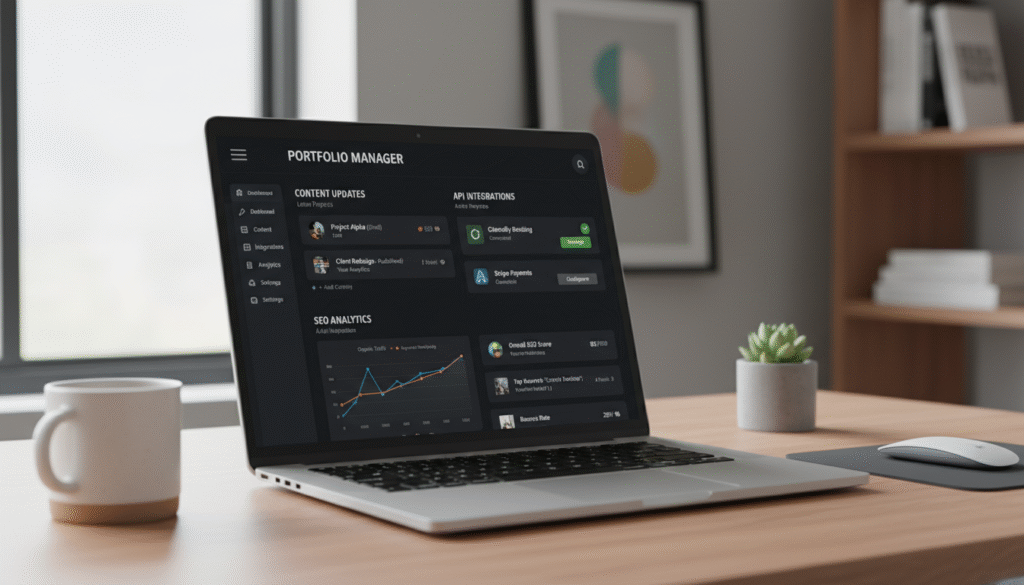
Manage and optimize your portfolio technically for smooth updates and client engagement.
Choosing the right platform is critical for building a performant, scalable portfolio that remains easy to update. Popular website builders like Webflow and Squarespace offer portfolio-optimized templates with fast load times and user-friendly editing tools. Alternatively, custom builds using modern front-end frameworks provide flexibility for tailored, distinctive experiences. Implementing CMS APIs can automate project updates, ensuring your portfolio stays dynamic without time-consuming manual edits—a method that saved one freelancer dozens of hours annually by syncing project data directly from a database.
Integrating third-party APIs for booking and contact management streamlines client interactions, enabling prospects to schedule consultations or send inquiries effortlessly. For example, a freelance developer who embedded a scheduling API converted 15% more visitors into booked clients compared to traditional email-only contact forms.
From a technical perspective, understanding proper HTTP methods—using POST for creating content, PUT for full resource updates, and PATCH for partial edits—maintains clean API interactions and smooth maintenance workflows. Neglecting routine website maintenance can harm SEO rankings and credibility; broken links and outdated projects diminish professionalism. Always back up your portfolio before updates to protect against data loss. Keep your interface simple and loading times fast to promote a positive user experience. Mastering these technical nuances ensures your portfolio remains reliable, professional, and well-aligned with your design and content strategies.

A clean, multi-device personal portfolio showcasing effective design and CTAs.
Looking at real-world examples highlights how effective combinations of design, storytelling, and branding convert visitors into clients across diverse fields. A creative designer’s portfolio incorporated a clear visual hierarchy, generous white space, and case studies structured around challenges, processes, and measurable outcomes. This deliberate approach resulted in a 25% increase in client leads after the strategic placement of CTAs following project descriptions.
Similarly, a freelance developer showcased interactive demos and employed JavaScript-driven updates to display live project statuses. Their contact form integrated an API-based scheduling tool, significantly increasing first-contact appointments. This mix of interactivity and seamless client engagement built trust and boosted conversion rates.
In the consultancy sector, a professional’s portfolio stood out through warm personal branding, a regularly updated keyword-optimized blog, and strong testimonials. Their ongoing content improvements enhanced search rankings, while authentic storytelling forged emotional connections that differentiated their services in a competitive marketplace. These case studies exemplify personal portfolio tips that transcend aesthetics—demonstrating how intentional design, selective project curation, and proactive conversion tactics work together to attract and secure clients online across industries.
Creating a personal portfolio that is visually clear, well-structured, and deeply personal is fundamental to standing out in increasingly competitive markets. By carefully curating projects that tell compelling, impact-driven stories, leveraging personal branding to foster authentic connections, and integrating smooth conversion tactics like strategic CTAs and intuitive contact flows, you establish a platform that not only showcases your skills but actively attracts and converts clients. Maintaining your portfolio with regular technical updates and SEO optimization ensures it remains discoverable, credible, and aligned with evolving client expectations.
Looking ahead, the most successful professionals will be those who treat their portfolios as living assets—continually refining design, storytelling, and user experience to anticipate changes in client needs and digital trends. How effectively you harness these strategies and stay adaptable will determine your competitive advantage in the evolving landscape of online client acquisition. The real question is not if you will invest in your portfolio’s growth—but how strategically you will use it to secure lasting client relationships and career success.

